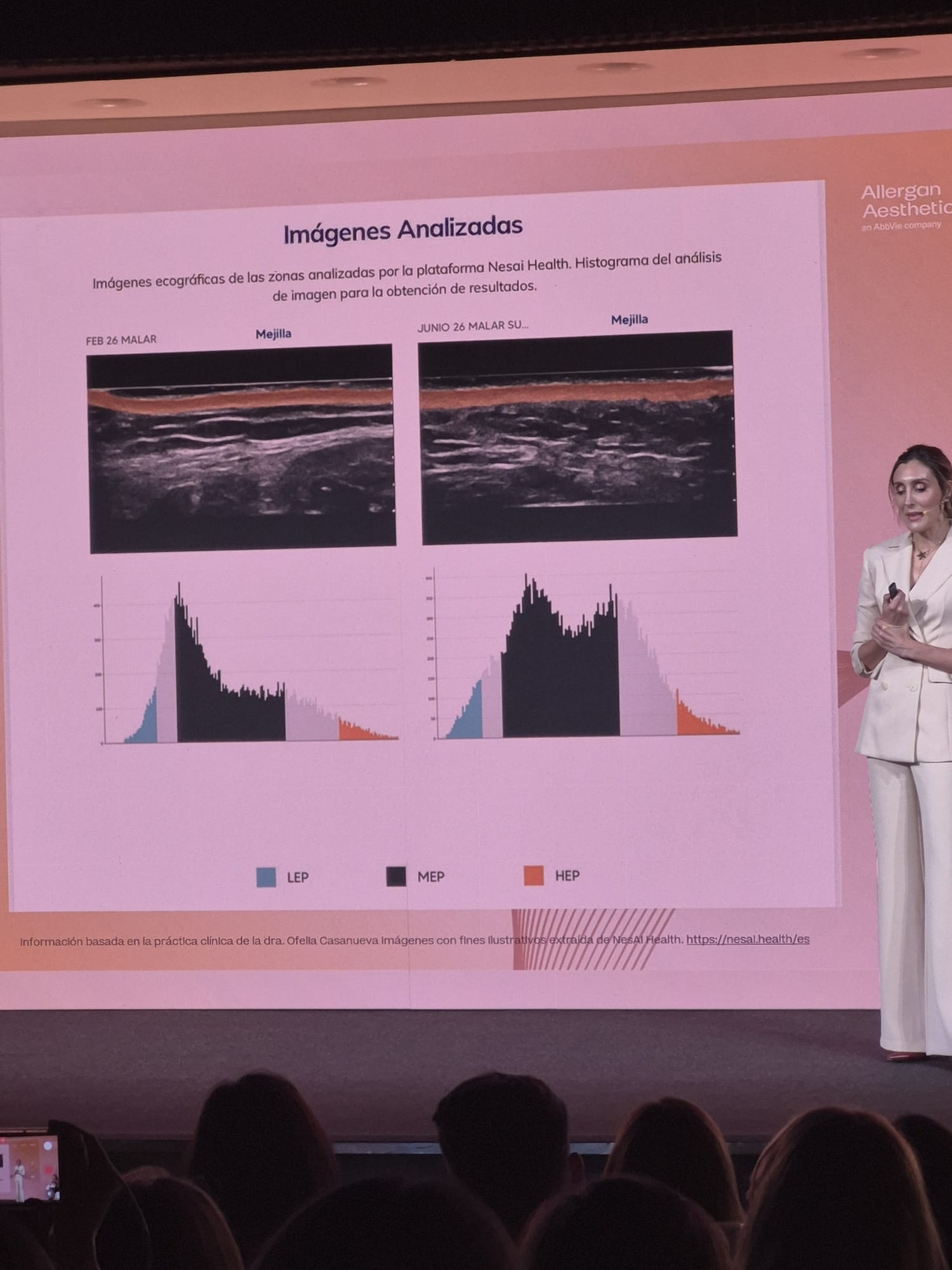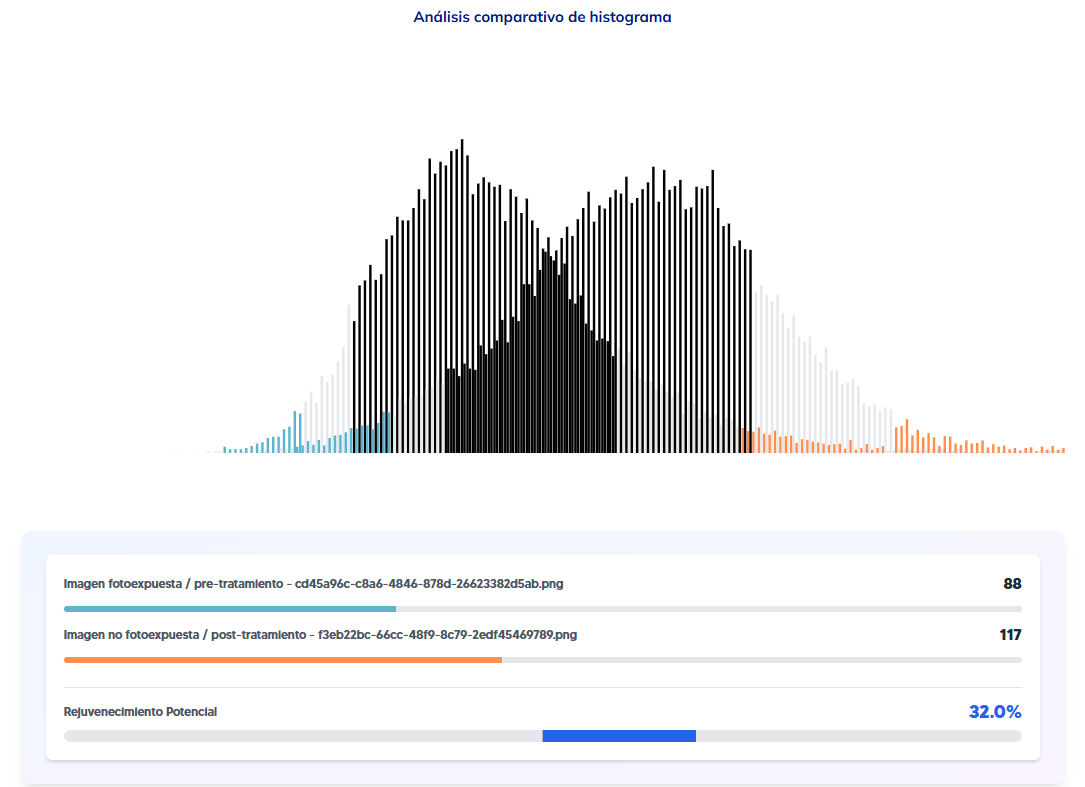
Is AI-based image analysis a substitute for medical judgment? No, and this isn’t a legal caveat: it is how the workflow is designed. The AI analyses the ultrasound image and produces a preliminary report; in Nesai Face, it is a report validated by a physician. The AI provides objective, reproducible data that didn’t exist in the consultation before, but the decision to treat, wait or refer always stays with the practitioner.
The clearest way to see that difference isn’t to explain it in the abstract, but to show how it works in real practice.
Case 1: how long a filler really lasts, with data instead of a generic schedule
A patient comes in for a new hyaluronic acid lip treatment. She had been given filler three years earlier at another clinic, where she was pressed to repeat the treatment every year, and she changed practitioner precisely because that schedule made her doubtful. Visual examination showed a slight asymmetry, without being able to confirm whether any residual material was left, or how much.
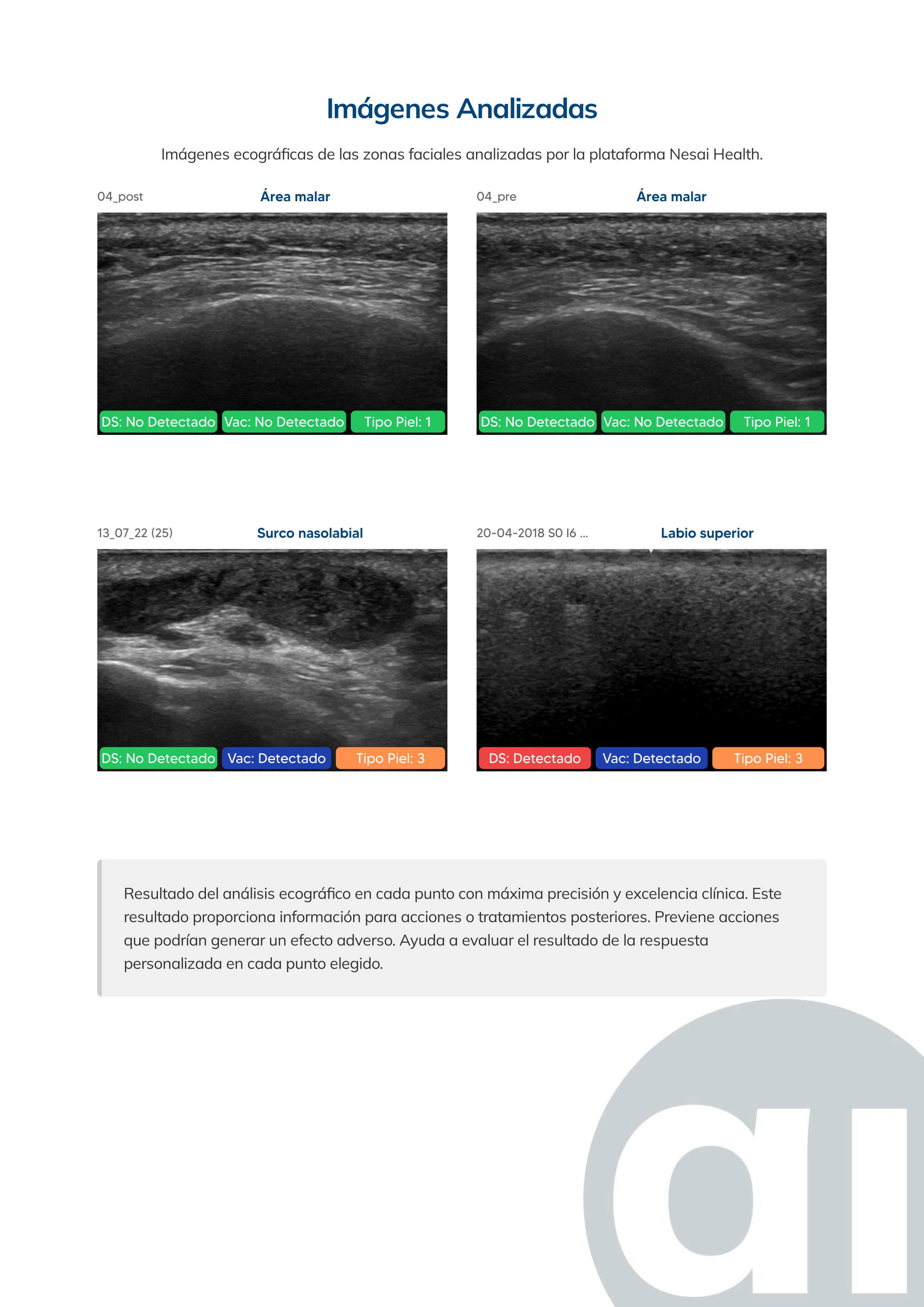
The ultrasound found no relevant material on one side (consistent with full reabsorption) and small vacuoles on the other. With that data, the physician could show the patient that the hyaluronic acid had lasted more than a year in some spots, well beyond what the previous clinic had suggested, and adjust the treatment.
With the data from Nesai, the physician made the decision with confidence. Nesai showed where material remained and where it didn’t; the physician decided what to do with that information.
Case 2: ruling out a risk before acting, in an emergency
A patient contacts the clinic with significant lip swelling, 48 hours before a trip. Another clinic had suggested hyaluronidase (the substance that dissolves hyaluronic acid), but she insisted she had not been injected with hyaluronic acid or silicone. With no physician available at that moment, giving hyaluronidase without confirmation would have been an unnecessary risk if the patient was right.
The assistant performed the ultrasound and had the report in about five minutes: no signs of hyaluronic acid or filler material. Hyaluronidase was avoided and a more suitable treatment was prescribed, with the swelling resolving quickly.
Once again, the data from Nesai made an informed decision possible, at a moment when, without it, the reasonable choice would have been more conservative (or simply different).
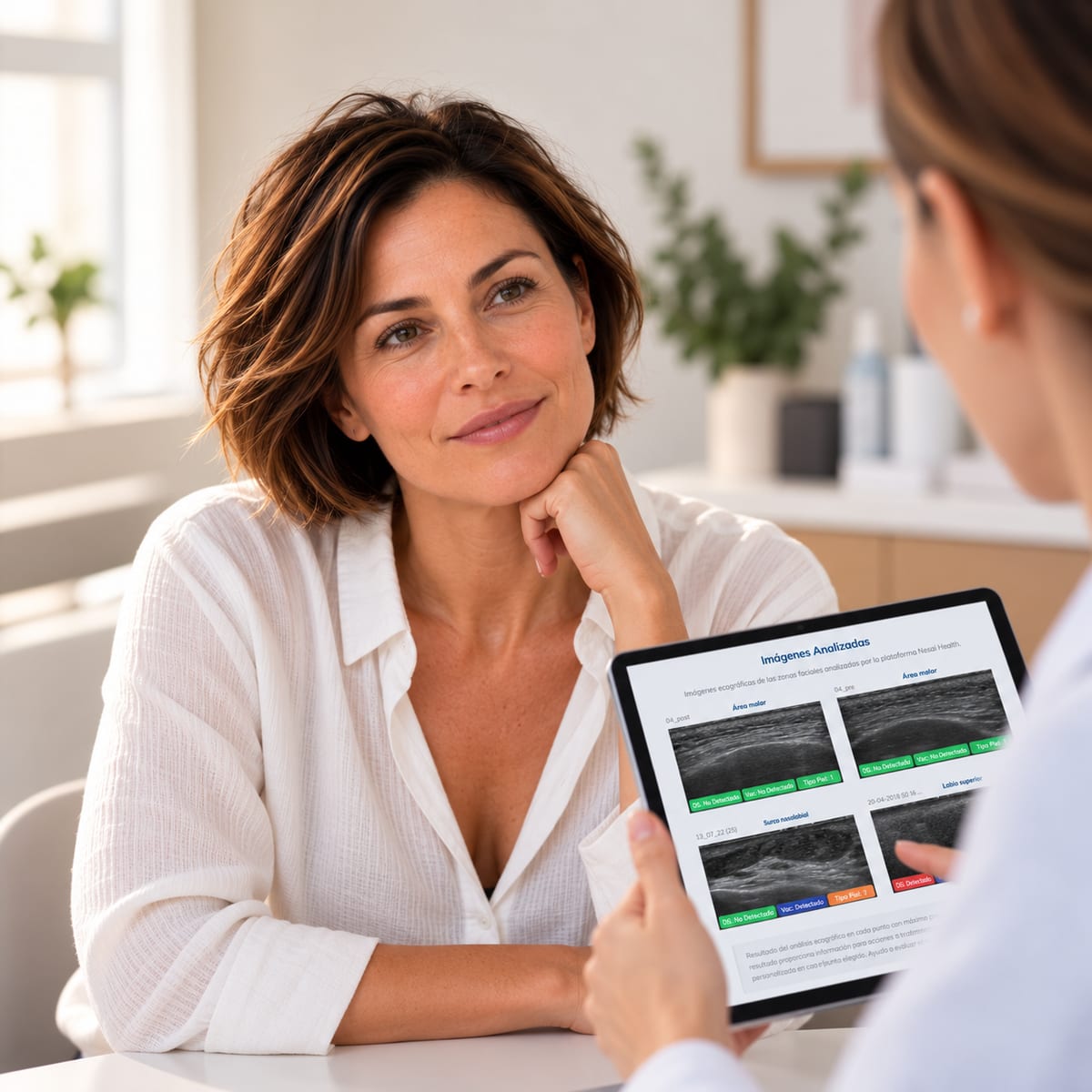
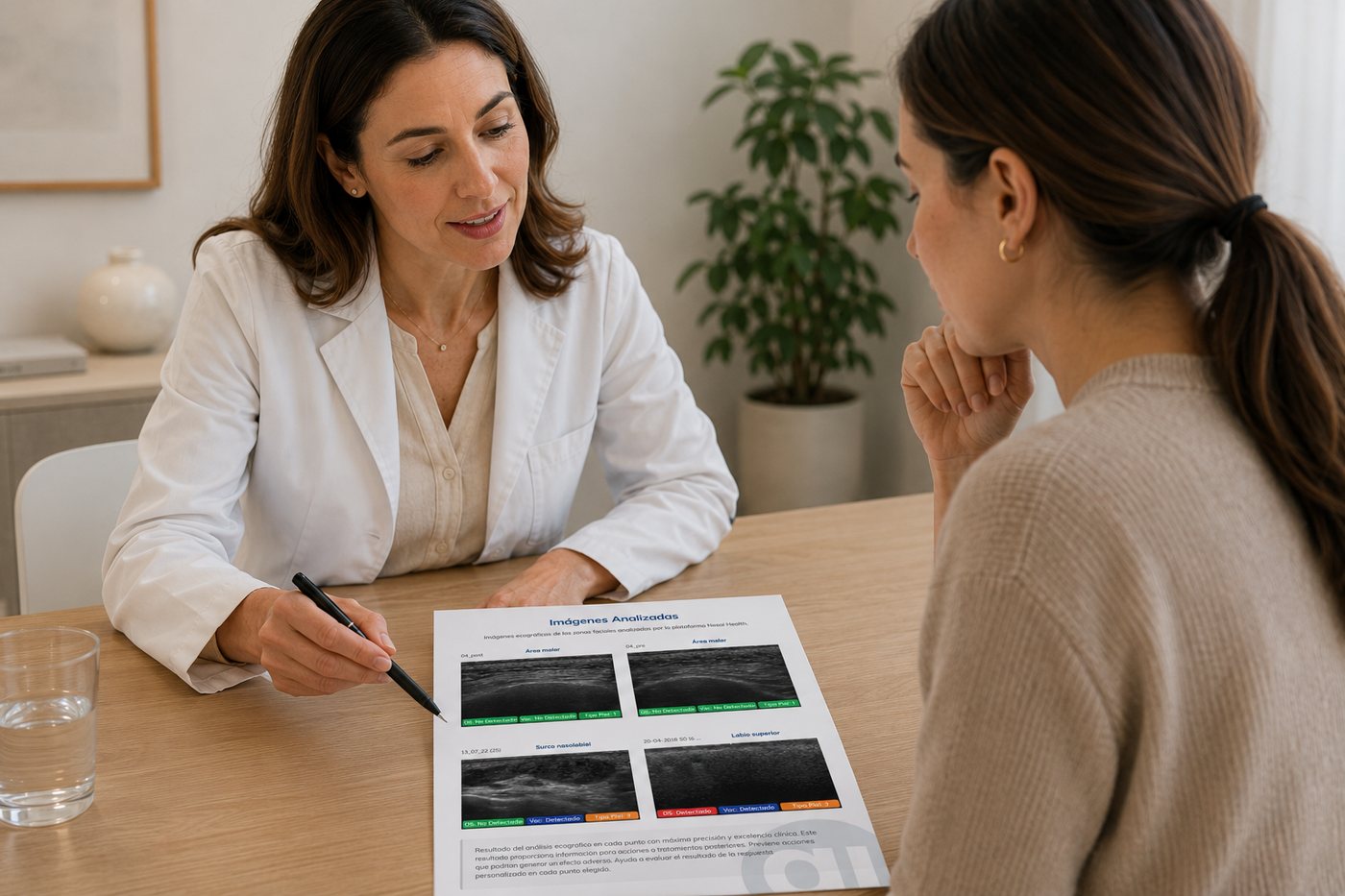 The report supports the conversation with the patient, it doesn’t replace it.
Why treating without this data is a real risk, not a formality
Injecting or intervening on an area without knowing what material lies underneath (or without being able to rule it out) is a clinical risk, for example when incompatible products are combined. These aren’t risks that can be stated with firm statistics, because there is no published study yet that quantifies them rigorously, but they are recognised risks in clinical practice when treating without prior verification. Ultrasound adds safety to clinical practice because it allows decisions based on objective information about what lies beneath the skin, instead of working blind.
The boundary, clearly
- The AI identifies patterns in the ultrasound image and quantifies the dermis.
- In Nesai Face, a physician validates that report before it reaches the patient.
- Which treatment is done, and when, is always decided by the physician.
Nesai supports clinical judgment, it doesn’t replace it.
See what each report measures on the Nesai Face and Nesai Derm pages.